
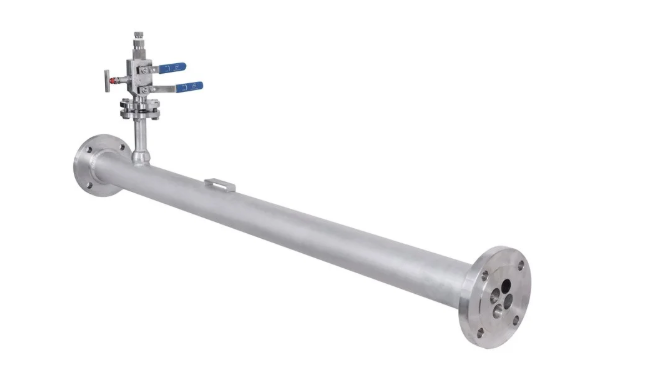

Water treatment relies on consistent chemical distribution throughout the flowing stream. Whether the process involves disinfection, pH correction, coagulation or conditioning, poor mixing can create uneven concentrations and affect downstream treatment. An inline mixing arrangement can provide rapid blending without a separate mixing tank or mechanical agitator. Its effectiveness depends on flow rate, pipe size, chemical properties, pressure loss and injection configuration.
Understanding Inline Static Mixing
An inline static mixer for water treatment is a fixed mixing device installed within a pipeline. It contains specially shaped internal elements that divide, redirect and recombine the flowing streams as water passes through the mixer.
How the Mixing Action Works
The mixer uses the energy already present in the flowing water. As the stream encounters the internal elements, its direction and velocity change repeatedly. When a chemical or secondary liquid is introduced upstream, these flow changes encourage it to spread throughout the main stream.
There is no motor, rotating shaft or impeller. This makes the equipment comparatively simple from a mechanical perspective and suitable for continuous process lines where space or maintenance requirements need to be controlled.
Why Installation Position Matters
A static mixer does not work independently of the surrounding pipework. The position of the chemical injection point, upstream fittings and downstream equipment can influence the quality of mixing.
The mixer should therefore be treated as part of the complete hydraulic arrangement rather than as an isolated component.
Chemical Dosing, Mixing and Flow Considerations
Chemical dosing requires rapid and consistent distribution throughout the water stream. An inline static mixer for water treatment can promote effective blending after injection, supporting applications such as disinfection, pH adjustment and coagulation. The mixer should be positioned appropriately between the injection point and downstream treatment stage, while considering chemical concentration, dosing rate and required mixing intensity. Static mixer selection should also account for minimum, normal and maximum flow rates, as higher velocity can improve mixing but increase pressure loss. The mixer must match the pipeline’s actual internal diameter, specifications and lining while preventing unwanted bypass flow.
Managing Pressure Loss
Every static mixing element introduces some resistance to flow. This creates a pressure drop that needs to be considered alongside the rest of the treatment system.
Balancing Mixing and Energy
Increasing mixing intensity can improve blending but may also require greater pumping pressure. A suitable design should provide the required level of uniformity without creating unnecessary hydraulic losses. Pump capacity, existing pipeline pressure and downstream requirements should therefore be reviewed before final selection.
Considering the Complete System
Pressure loss from the mixer should not be considered separately from other components. Pumps, valves, filters, bends and elevation changes can all contribute to the overall hydraulic requirement. A system-level assessment can help prevent unexpected pressure limitations after installation.
Chemical Compatibility and Material Selection
Water treatment systems may handle chemicals with different levels of corrosiveness and chemical activity. Material selection should therefore reflect the actual operating environment.
Housing and Internal Elements
The mixer body and internal elements should be compatible with the process fluid and treatment chemicals. The same consideration applies to connections and associated injection components. Chemical concentration, operating temperature and exposure duration may all influence material performance.
Maintenance Requirements
Although static mixers have no rotating machinery, inspection and cleaning may still be necessary depending on the process. Suspended solids, deposits or chemical precipitation can affect internal passages over time. The installation should provide reasonable access for maintenance without requiring major disruption to the treatment line.
Role of Chemical Transfer Pumps
The mixer is only one part of a chemical dosing arrangement. The equipment supplying the chemical must also deliver the required flow at suitable pressure.
Where an AODD Pump Fits
An AODD pump may be considered for chemical transfer or other fluid handling duties where its operating characteristics are suitable for the application. It uses compressed air to alternate diaphragm movement and transfer fluid through the pump. Its ability to handle different types of liquids can make it useful in certain treatment and chemical handling systems.
Pump and Mixer Functions Are Different
The pump moves the chemical, while the mixer distributes it through the main water stream. These two components should therefore be sized and selected according to their individual functions while being checked for compatibility as a complete process arrangement. For highly controlled dosing applications, another pump technology may be preferable where precise metering is the primary requirement.
Common Water Treatment Applications
Static mixers can support various continuous treatment processes, including:
- Drinking water and wastewater treatment
- Effluent conditioning
- Chemical neutralisation
- Disinfection
- pH adjustment
- Coagulant injection
- Process water conditioning
The configuration should match the chemical properties, flow conditions and treatment requirements.
Avoiding Common Design Problems
Mixing performance can suffer when:
- Flow range is not properly considered
- Chemical injection is poorly positioned
- Pressure loss exceeds pump capacity
- Nearby fittings disturb flow
- Materials are incompatible with chemicals
- Maintenance access is overlooked
Addressing these factors during design can prevent costly modifications later.
Conclusion
An inline static mixer for water treatment can rapidly distribute treatment chemicals through continuous water flows. Effective performance depends on correct positioning, internal geometry, flow conditions, pressure loss and material compatibility. NND OIL & GAS can support these requirements with suitable process equipment and engineered solutions for complete dosing systems.